

During a major apartment renovation, the electrical installation often looks like a hidden item in the budget. The client sees channels, cables, dust, and boxes, but not always the logic behind the price. In practice, the electrical system determines how convenient, safe, and calm the home will be after renovation.
A good electrical installation starts with a plan for furniture, appliances, lighting, and daily habits. In a normal apartment, around 100 electrical points is not unusual. The price includes much more than the visible socket on the wall.
Why electrical work looks expensive
The first reason is the number of points. An electrical point is not only a socket. It includes switches, lighting outputs, sockets above the kitchen counter, oven, hob, dishwasher, washing machine, dryer, boiler, air conditioner, fan, mirror lighting, internet, TV, router, intercom, floor heating, and future smart-home options.
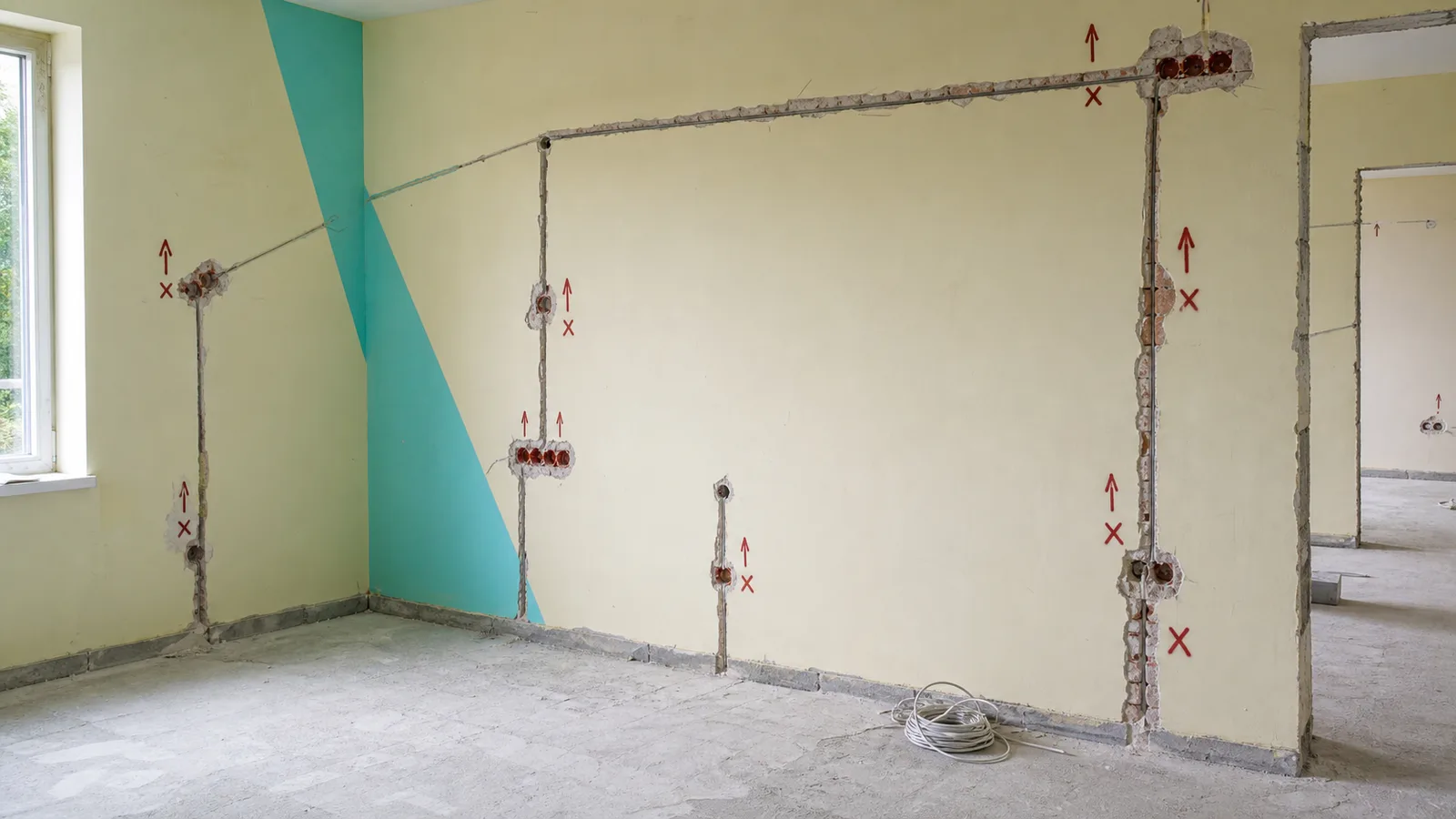
The second reason is that every point has a route. The team must define the position, cut channels, lay cables, install boxes, plan circuits and protection, and prepare distribution points. After that, the channels must be closed and the walls restored.
Real project example
In one of our projects, the task was recorded as a full electrical installation package. The work included channels, cables, boxes, distribution points, and preparation for final elements. The installation of the final sockets, switches, lighting bodies, thermostats, and similar elements comes later.
This is the part of the renovation that almost disappears after the walls are finished. If it is done badly, however, the result is felt every day.
The correct order starts with a plan
Electrical work should not start with demolition. First we need to know where the kitchen, beds, sofa, desks, TV, washing machine, boiler, air conditioners, and lighting will be. If the kitchen is designed after plastering, points will almost certainly need to move.
The practical approach is to go room by room. In the living room, think about TV, router, lamps, chargers, and vacuum cleaner. In the bedroom, sockets near the bed, switches, wardrobe lighting, and air conditioning matter. In the kitchen, there are usually the most points because every appliance has a place and often its own circuit.
When should old wiring be replaced?
In an old apartment, the first question is whether the old installation makes sense at all. If there are too few sockets, old cables, unclear circuits, an old panel, or a kitchen with many new appliances, partial replacement often only delays the problem.
During a full renovation, it is usually wiser to do the electrical work before finishing. After tiles, plastering, latex paint, and furniture, every change becomes much more expensive.
What is actually included?
The work is not simply “running a cable”. Routes, channels, and openings are made. Cables are laid, circuits are separated, outputs are prepared, loads and protection are considered, and boxes and distribution points are installed.
This is why comparing only the price per point can be misleading. The number of points, route length, wall condition, wall material, access, need for a new panel, bathrooms, and kitchen all affect the final scope.
Our advice
Do not plan the electrical installation as a technical afterthought. Plan it together with the furniture, kitchen, lighting, appliances, and daily use of the home. That is the difference between “there is electricity” and a home that is convenient to live in.
Planning a full apartment renovation?
Send us the layout and your desired room functions. We will help you plan the electrical points before the walls are finished.
Request an offerFrequently asked questions
Why can an apartment have around 100 electrical points?
Because sockets, switches, lighting outputs, kitchen appliances, boiler, air conditioners, internet, TV, bathroom equipment, and future smart devices all count.
When should electrical work be planned?
Before plastering, painting, flooring, and furniture. Late changes mean reopening finished walls.
Is the visible socket the whole cost?
No. The cost includes planning, channels, cables, boxes, circuits, protection, distribution points, and preparation for finishing work.