
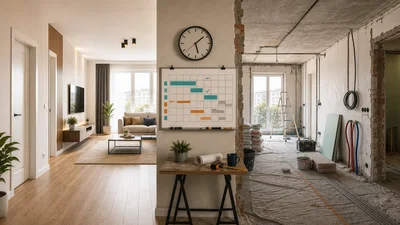
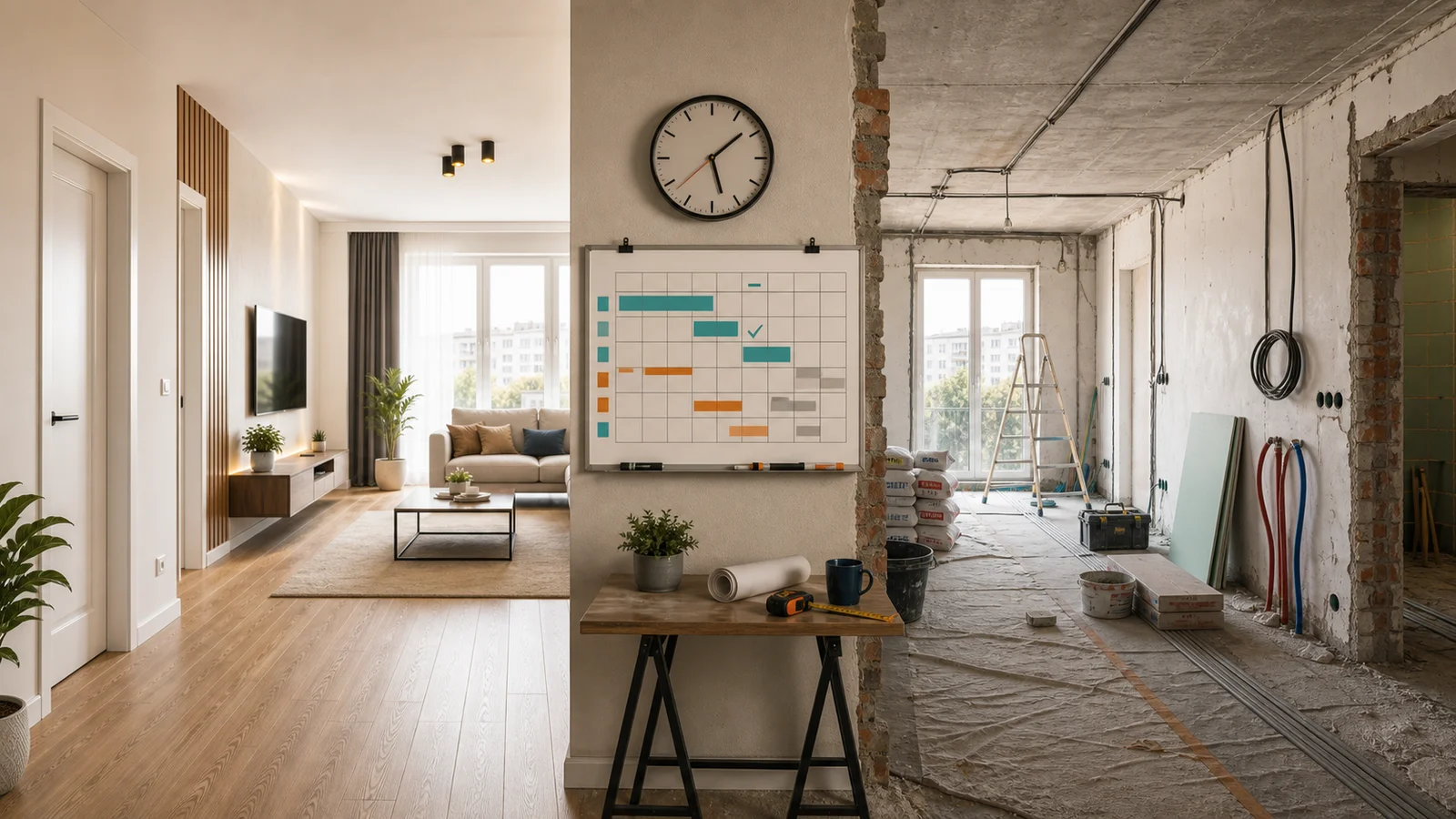
A full renovation of an old 60-70 m² apartment is rarely just “new paint and flooring”. The real work often starts with removing old layers, finding weak walls, checking installations, carrying waste, and preparing surfaces that have accumulated problems for years.
Realistic timeline
The timeline depends on the scope, access, condition, and decisions that are already made. An old apartment can take longer than a new-build apartment because the team first has to reveal and correct hidden problems.
Demolition, waste removal, drying times, installation changes, leveling, plastering, sanding, primer, paint, flooring, and final details all need their own time.
Typical hidden costs
Hidden costs usually come from work that is not visible in the final photos: carrying materials, removing old layers, taking out waste, repairing weak plaster, closing channels, leveling floors, and preparing walls.
Demolition and waste
In old apartments, demolition is not only about breaking. Waste must be packed, carried, loaded, and removed. If there is no elevator or access is difficult, this becomes a real part of the budget and schedule.
Walls and surfaces
Old walls often need more than paint. They may require plaster repair, mesh, primer, gypsum plastering compound, fine plastering, sanding, and careful preparation before latex paint can look good.
Skipping this stage usually creates a cheap-looking finish even if the final paint is expensive.
How to plan better
Start with realistic expectations. Send photos and videos, clarify the desired scope, and be ready for the first inspection to reveal extra preparation work. A good offer should separate visible finishes from the hidden work needed to make those finishes last.
Renovating an old apartment?
Send us the property details and we will help you estimate the real scope, including preparation and hidden work.
Request an offerFrequently asked questions
How long does an old apartment renovation take?
It depends on scope and condition, but old apartments usually need more preparation and hidden repair work than new-build properties.
What hidden costs are common?
Demolition, waste removal, carrying materials, wall repairs, leveling, old installations, and extra preparation.
Why is the first phase so important?
Because demolition and inspection reveal the real condition of the walls, floors, ceilings, wiring, and plumbing.