
From the outside, renovation can look simple: a team arrives, completes the tasks, and everything is ready. In reality, there are dozens of decisions, materials, craftsmen, deadlines, photos, client choices, and small details that must reach the right person at the right time.
That is why we prefer to be direct: sometimes mistakes happen. The more important question is what we do when they do. At Happy Builder, the rule is simple: we acknowledge the problem, fix it, and then change the process so the same issue becomes much harder to repeat.
When we make a mistake, we take responsibility first. Then we correct the result. After that, we improve the system.
Why talk about mistakes?
Trust is not built only with nice photos after the renovation. It is also built in the moments when something does not go according to plan. The client should know that the company in front of them will not hide behind excuses.
We work with a task catalog, an ERP system, a mobile app, project photos, statuses, internal checks, and craftsmen by specialty. This system helps us manage renovation work. When we find a weak point, we treat it as a signal for improvement, not as an isolated incident to forget.
A real example: blue walls
On one project, the client had clearly requested blue walls. For different reasons, that choice did not reach execution correctly and the walls were painted white.
The client was disappointed, and that was completely understandable. When someone has clearly chosen a finish for their own home, they expect it to be followed. We did not try to turn this into a long explanation. We acknowledged the mistake, corrected the result, and changed the process.
First we acknowledge and fix
If the client requested blue and the walls are white, the issue is not just “communication noise”. The result is wrong. The first step is therefore clear: we say that it is our mistake and we correct it.
Renovation is stressful enough without the client having to prove the obvious. When the mistake is ours, the client should not carry the burden of defending what was already agreed.
Then we changed the ERP process
The real improvement came after the correction. We saw that color choice should not live only as a comment somewhere in a conversation. It has to be structured information attached to the exact task.
We changed our ERP system so critical choices can become required task attributes. For example, when latex paint is applied to walls, color can be required before the task is allowed to move forward.
We also changed the client mobile app
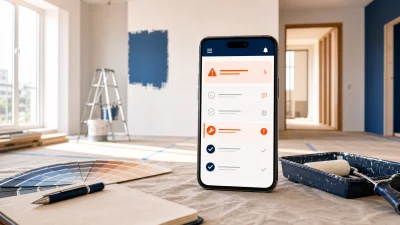
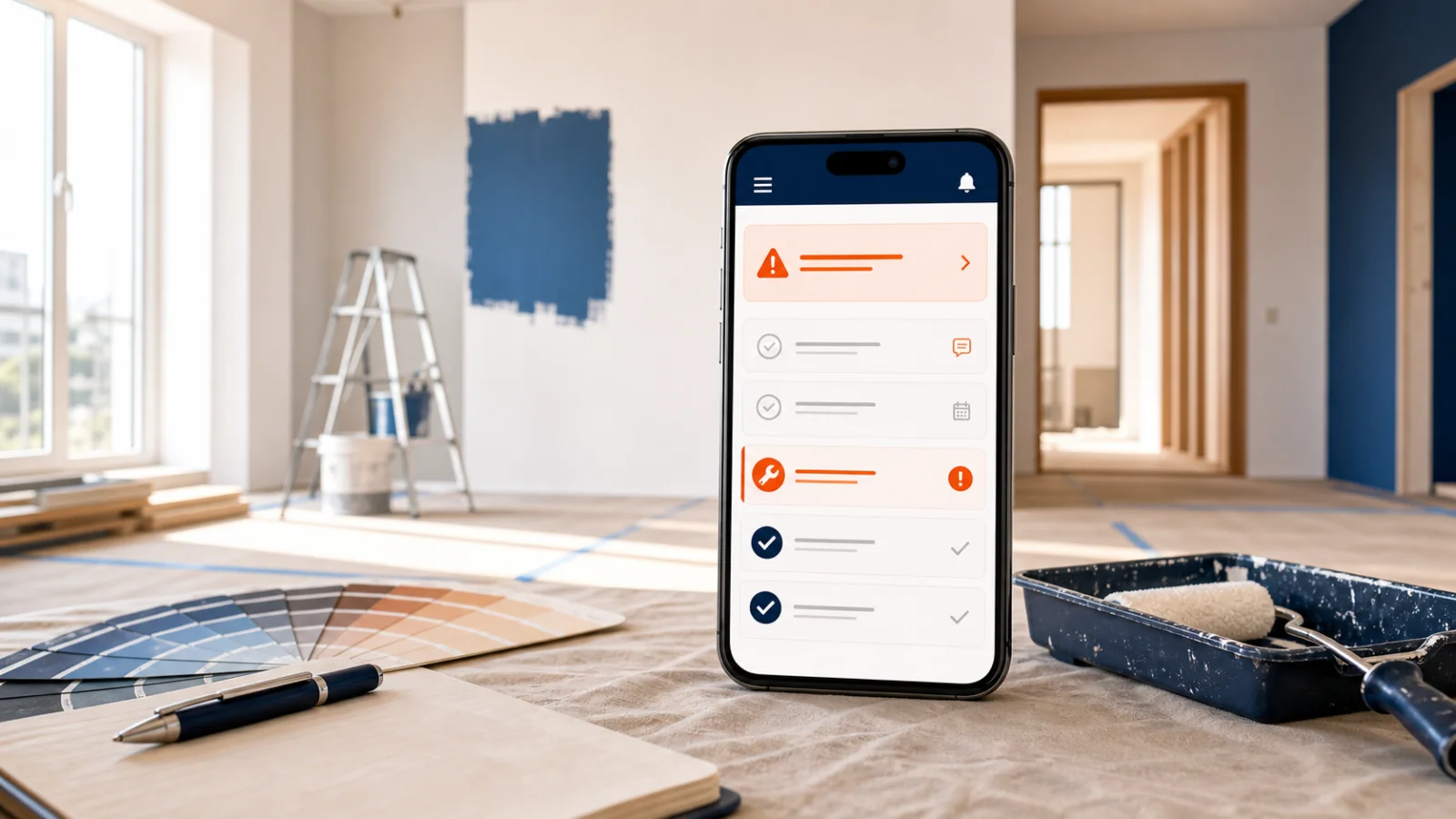
The client now gets clearer visibility when a choice is needed. Instead of a hidden missing detail, the app can show that a task requires input from the client before work continues.
This is important because renovation decisions are often practical: color, model, finish, direction, location, or another parameter. If the decision is missing, the system should make that visible early.
The contractor is also protected from starting incorrectly
We changed the contractor flow too. If a task has a required parameter that is missing, the craftsman should not be pushed to start based on incomplete information. The app can stop the task before the mistake reaches the wall, floor, ceiling, or installation.
What changed in practice
- Important client choices are treated as structured task data.
- Missing required information is visible before execution.
- The client can see where a decision is needed.
- The contractor is prevented from starting a task with missing critical information.
- The same lesson improves future projects, not only the one where the issue appeared.
Do you want a renovation process with clear task control?
Send us information about your property and we will prepare the next steps with a clear scope, task structure, and transparent execution.
Request an offerFrequently asked questions
What happens if Happy Builder makes a mistake?
We first acknowledge it, then fix the result, and then adjust the process so the same mistake is much harder to repeat.
How does the mobile app help?
It makes required client choices visible and prevents contractors from starting tasks when important parameters are missing.
Is this only about one project?
No. The point is to use every problem as a signal for improving the system across future projects.